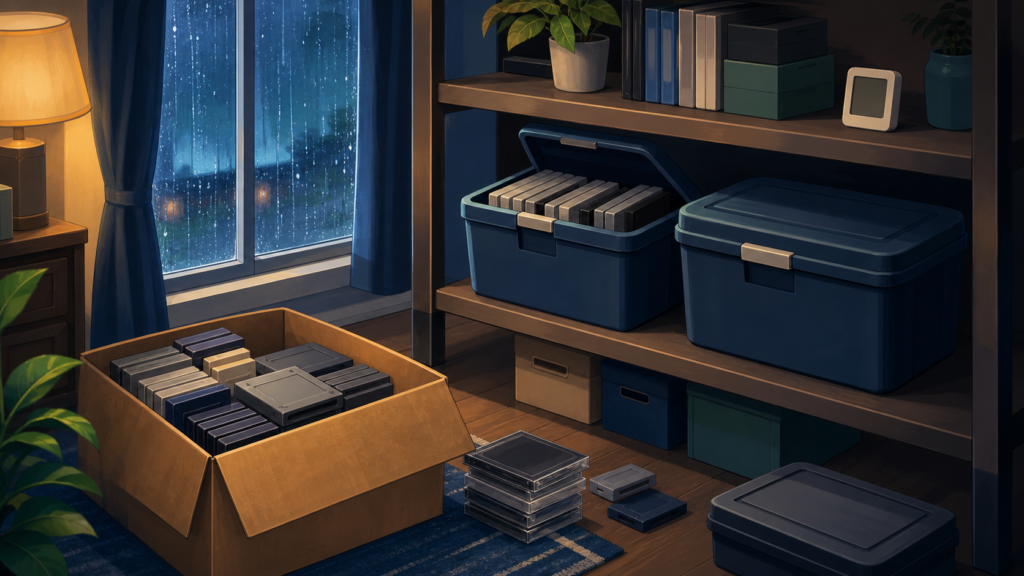
Storm-season storage for a retro game collection starts with elevation, not a shopping cart. Move cartridges, discs, manuals, and consoles off the floor and out of attics, garages, or a basement that has flooded before. Then choose a cool, dry, stable room and document what is there. My recommendation is to make those moves now if flooding, tropical weather, or heavy summer humidity is a realistic local risk.
NOAA issued its updated 2026 Atlantic hurricane outlook on August 6, right as the season enters its peak months. The outlook favors a below-normal season, but NOAA also says a seasonal forecast cannot predict landfall for a particular place. A quieter basin is not a force field around the game shelf.
I spent the cartridge-swapping years thinking the worst storage hazard was a friend forgetting which box belonged to whom. Water, heat, sunlight, and big humidity swings are less funny. They also do not care if a cartridge is common, rare, or still wearing the masking-tape label somebody added in 1993.
The forecast is not a shelf-level prediction
The NOAA Climate Prediction Center’s August 6 outlook gives a 75 percent chance of a below-normal Atlantic season. It still expects most activity during August, September, and October, and it warns that hurricane-related disasters can occur even in a low-activity year. NOAA does not use the seasonal outlook to predict landfalls.
Use local watches, warnings, evacuation orders, and flood information for immediate decisions. The seasonal update supplies the timely reminder: the peak period has started. The article cannot tell a reader in Ohio and a reader on the Gulf Coast to make the same emergency move. It can settle the collection question before a warning arrives.
If the collection sits below a known flood level, near a window that leaks, or in a basement with a water history, relocate it to a higher interior area. If none of those conditions apply, improve the everyday storage environment and keep monitoring it. The risk changes the urgency, not the basic rules.
Move the collection before buying containers
The National Archives home-media storage guidance recommends stable low temperatures, low humidity, protection from flooding and sunlight, and storage off the floor. It specifically warns against unregulated attics and garages. It also says to choose another floor when a basement floods occasionally.
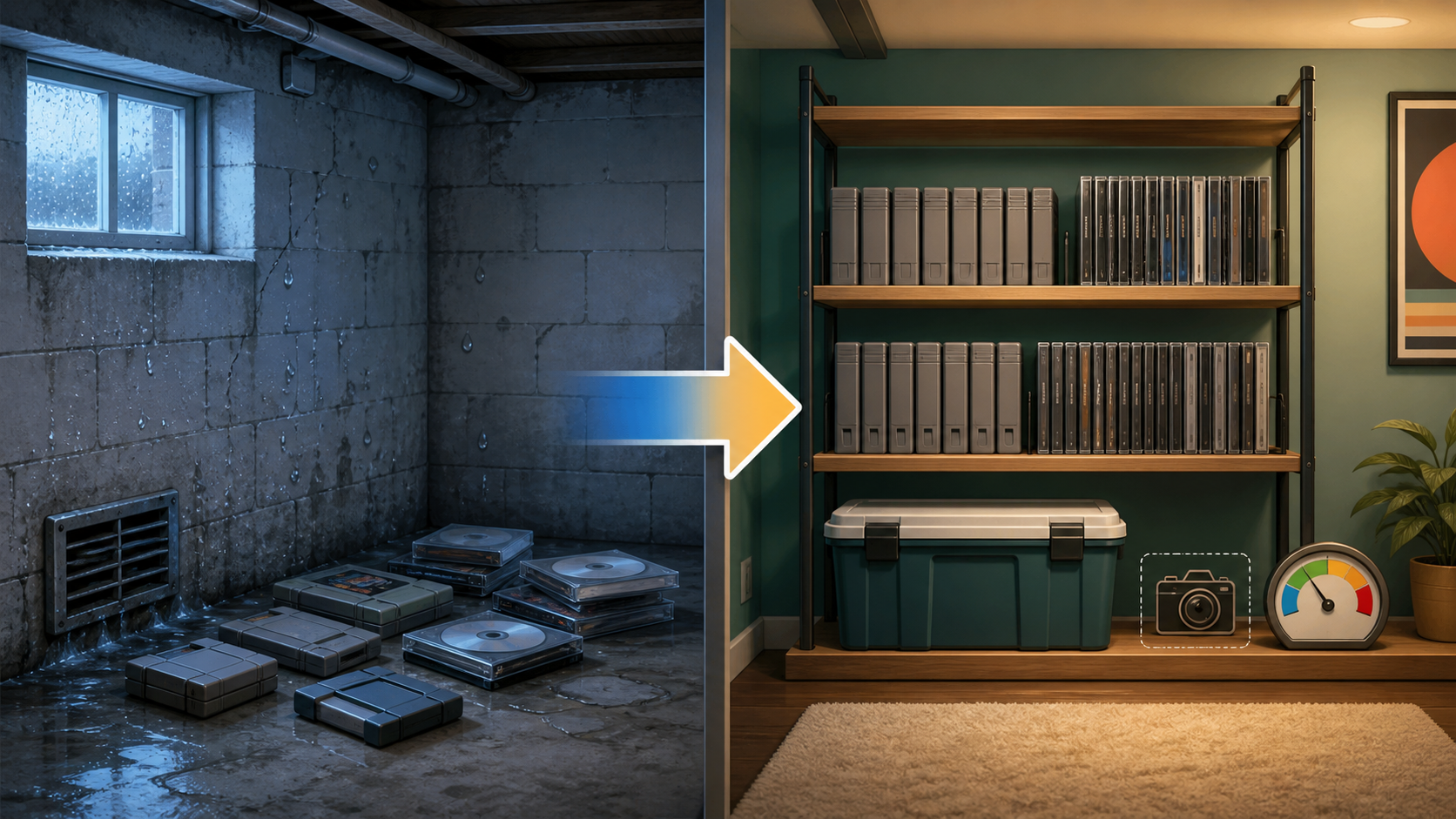
Start by relocating the collection. Use sturdy shelving that can carry the actual load, leave space between the shelf and any damp wall, and keep the lowest stored item well above the floor. Do not stack a tall shelf where it blocks an exit or could tip into a walkway. Containers are the second line of defense; a gasket cannot rescue a bin sitting in rising water.
For a flood-prone home, Ready.gov advises moving valuables to higher levels and keeping important documents in a waterproof container. A water-resistant storage bin with a gasket can add protection when its size, closure, and material suit the collection. It should still be elevated and accessible enough to move safely.
Watch humidity, not just rain
Relative humidity, usually shortened to RH, is the amount of moisture in the air compared with what the air can hold at that temperature. The Library of Congress recommends a cool, relatively dry, clean, stable environment for home audiovisual collections and says to avoid attics, basements, leaks, direct light, radiators, and vents. The National Archives gives a broader home-media range of 55 to 70 degrees Fahrenheit and 30 to 55 percent RH while emphasizing stability.
Those numbers come from guidance for mixed audiovisual materials, not a promise that every game cartridge and optical disc has one magic setting. The practical rule is steadier, cooler, and drier rather than chasing a single number with wild daily swings. A digital indoor hygrometer can reveal trends if its stated range and accuracy fit the room. Place it near the collection, not directly in the path of a vent or sunny window.
Record morning and evening readings for a week during humid weather. If the room stays damp or changes sharply, fix the room or move the collection. Do not seal visibly damp cases inside a bin. A closed container traps the conditions already inside along with the games, which is the sort of efficiency nobody requested.
Give cartridges and discs sensible support
Store cartridges and disc cases upright so shells and hubs carry the media as intended. The Library of Congress says optical discs should be handled by the edge and center hole and that replacement cases should secure a disc by its center hub. Keep direct sunlight off labels, manuals, and plastic cases. Leave food, drinks, and cleaning chemicals somewhere else.
Inspect before packing. A musty smell, visible spotting, corrosion, or moisture means the item needs isolation and format-appropriate advice, not a quick wipe followed by a sealed box. The NerdHobbies console cleaning and maintenance guide explains when routine cleaning should stop and repair help should begin.
Keep consoles and power supplies in the same inventory, but do not cram heavy hardware on top of disc cases or manuals. Coil cables loosely, keep detachable batteries subject to their manufacturer guidance, and avoid a single container so heavy that moving it becomes unsafe. Several manageable bins beat one treasure chest that requires a side quest and a back brace.
Make an inventory usable under pressure
Photograph each shelf, then make a simple list with the item, condition, room, container, and date. Capture serial numbers only for hardware where they are present and useful. Keep sensitive purchase records or account details out of a casually shared spreadsheet, and keep a protected digital copy away from the collection.
Label containers with a neutral number and keep the detailed list separately. That makes it possible to say “move bins three through five” without advertising the contents to everyone who sees the shelf. Store one copy of the inventory away from the collection. A phone photo that disappears with a damaged phone is not an offsite copy.
The site’s retro gaming setup guide recommends keeping only the accessories that solve a real problem. Apply the same rule here. Elevation, stable climate, sound cases, and a usable inventory matter before decorative protectors or elaborate display lighting.
My pre-storm rule
If local flooding or tropical weather is plausible, move the collection to a higher interior location now, use water-resistant containers as added protection, and keep an offsite inventory. In a lower-risk home, get games off the floor, avoid attics and garages, monitor humidity, and store cartridges and disc cases upright. Follow local emergency instructions if conditions change; no collection is worth delaying an evacuation.
Raise the shelf, take the photos, and let the forecast stay boring. The cartridges have already survived long enough without learning to swim. Gamer Dude out.