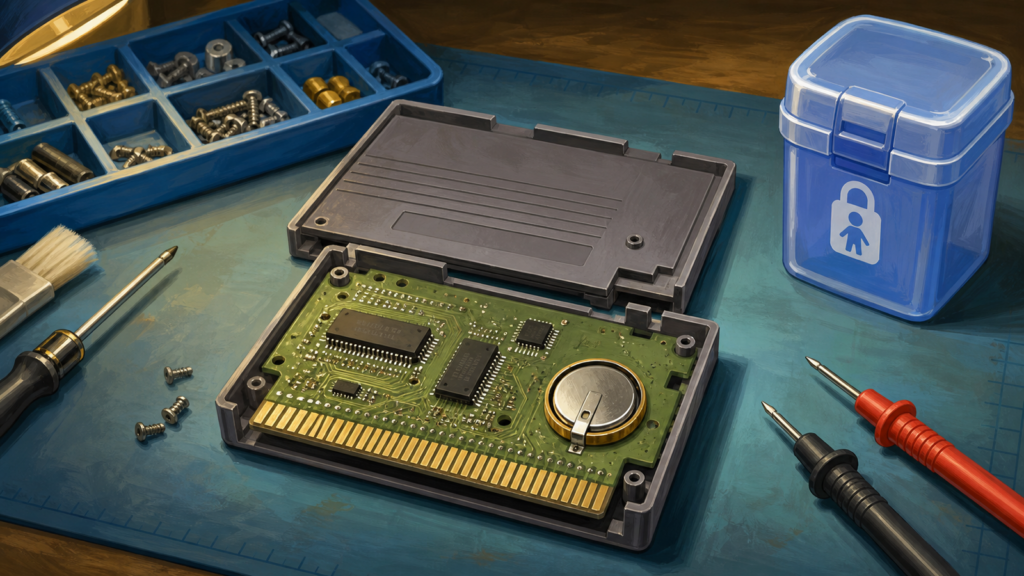
Before replacing a cartridge save battery, check the package against current recalls and decide if the repair belongs on your bench at all. A May 2026 recall covers about 94,000 LiCB-branded CR2032 lithium coin batteries sold online in February because the packs lacked required child-resistant packaging and warnings. That is a real reason to inspect the batteries already sitting beside the soldering iron.
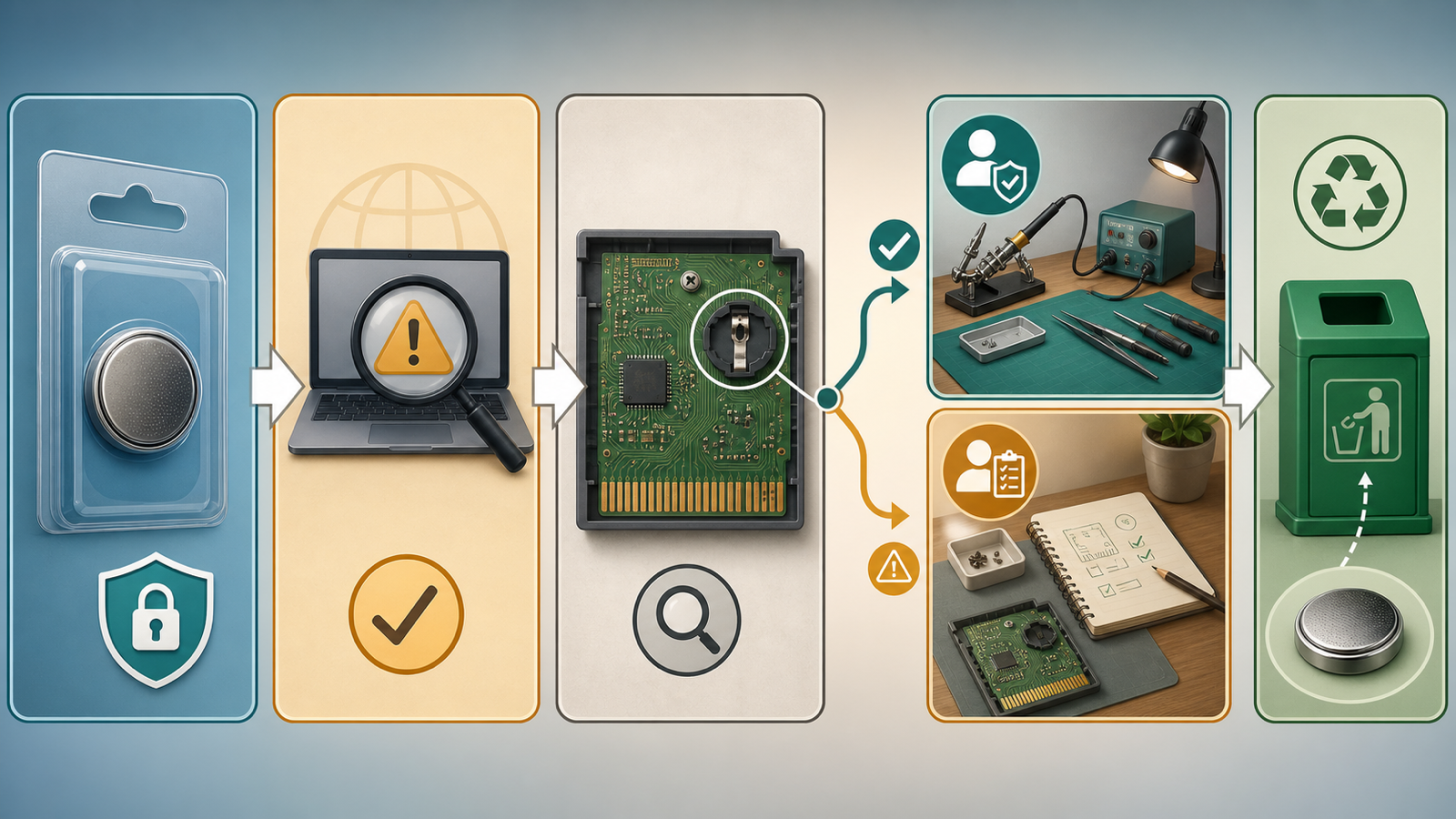
My recommendation is straightforward. Stop if the replacement pack matches the recall. For any other battery, identify the exact chemistry and connection used by the cartridge before ordering. If the cell is soldered to the board and desoldering small electronics is new territory, pay a qualified repair shop. A saved game is not the ideal training level for heat, polarity, and fragile copper pads.
I grew up treating a cartridge save as a small miracle. The game remembered progress after the console was unplugged, which felt suspiciously advanced next to passwords copied onto notebook paper. Decades later, that little battery deserves more respect than a random coin cell tossed into a parts drawer.
Check the current CR2032 recall first
The CPSC recall notice identifies LiCB CR2032 3V batteries sold in two packs containing five cells each. The brand and CR2032 marking appear on both the cell and package. The recall concerns missing child-resistant packaging and warnings required by Reese’s Law, not a claim that the cells caused save failures.
CPSC tells consumers to stop using the recalled batteries, store them where children cannot reach them, contact the seller for a refund, and follow local hazardous-waste guidance for disposal. The notice reports no incidents or injuries. Check the exact brand, cell marking, package arrangement, and purchase timing against the official page. Similar-looking silver discs are not automatically part of this recall.
Keep every loose coin cell away from children even if its packaging is compliant. CPSC warns that swallowing a coin battery can cause internal chemical burns, serious injury, and death. A workbench container should close securely, and the floor beneath the bench should not become overflow storage.
Match the battery and connection, not the shape
Open the cartridge only with a guide for that exact board revision and the correct security bit. Photograph the board before touching it. Record the battery marking, polarity, how its tabs attach, and any corrosion or lifted pads. Two cartridges for the same console can use different boards, so a shopping list copied from a broad forum post is not enough evidence.
Do not assume a CR2032 is correct because it fits the empty circle on the board. Chemistry, nominal voltage, tab orientation, physical clearance, and polarity all have to match the documented design. A holder conversion also changes the mechanical fit and can place pressure on the shell. If model-specific documentation does not settle those questions, the decision is to stop and use a repairer who can identify the board.
A battery-backed save may need a documented preservation method before power is removed. Do not promise yourself that a save will survive because the swap will be quick. Ask the repair shop about save preservation before handing over the cartridge, and treat any transfer method as board-specific.
Know when the repair shop is the better tool
Choose professional repair if the board has corrosion, previous solder damage, missing pads, a cracked shell, an unknown battery, or a save that cannot be risked. The same answer applies if there is no temperature-controlled iron, ventilation, stable magnification, or experience removing a two-tab component. Pausing is diagnosis, not defeat.
For a hobbyist already comfortable with small electronics, a digital multimeter for electronics repair can confirm polarity and check the board without guessing, provided its probes and ranges are understood. A temperature-controlled soldering station is appropriate only for someone who already knows how to work without overheating pads. Neither tool turns the cartridge into a beginner exercise.
The NerdHobbies console cleaning and maintenance guide covers the larger boundary between routine cleaning and repair. Battery replacement is repair because it changes an electrical component and can damage the board or erase data.
Keep the soldering iron off a bare coin cell
Murata’s official CR2032 data sheet says not to solder batteries directly and to observe the specified soldering conditions for tabbed batteries. That distinction matters. A replacement intended for board mounting should arrive with the correct tabs already attached by an appropriate manufacturing process. Heating a bare cell to improvise tabs is not the shortcut.
Before work begins, disconnect the console, remove the cartridge, clear the table, and keep loose metal away from the battery. Confirm polarity from the original board and documentation twice. If the old cell is swollen, leaking, hot, punctured, or corroded, stop handling it and get battery-specific guidance from the manufacturer or local hazardous-waste authority.
After a documented repair, inspect for bridges, loose tabs, pinched wires, and shell interference before the cartridge goes near a console. Test the game normally and create a fresh save only after basic operation is stable. If the cartridge behaves oddly, power down and return to inspection instead of repeatedly cycling the console.
Isolate the old battery and use the right collection route
The EPA’s used household battery guidance, updated July 21, 2026, says button and coin batteries should be kept out of household trash and municipal recycling bins. It recommends placing each battery in a separate plastic bag or covering its terminals with non-conductive tape, then using a specialized recycler, participating take-back location, or local household hazardous-waste program.
Do not drop a loose coin cell into a jar with screws, other batteries, or cartridge contacts. Metal touching the terminals can create a short circuit even when the battery seems spent. Keep the removed cell isolated and out of children’s reach while checking the collection location’s instructions. Damaged or recalled batteries may require a different route, so call ahead rather than arriving with a mystery bag.
The practical call
Check the recall, identify the exact board and battery, and protect the old save before heat enters the picture. Use a qualified repair shop if any part of that chain is uncertain. Experienced hobbyists should use a documented tabbed replacement, keep heat away from the bare cell, inspect the board, and recycle the old battery through the route specified locally.
Keep the save, keep the board, and keep loose coin cells out of the junk drawer. That is a clean win. Gamer Dude out.